

Engineering the Future: Navigating a Nuclear Tomorrow

25 February 2025
6.00pm – 9.00pm AEDT
John Niland Scientia Building, UNSW Kensington Campus
This event has ended
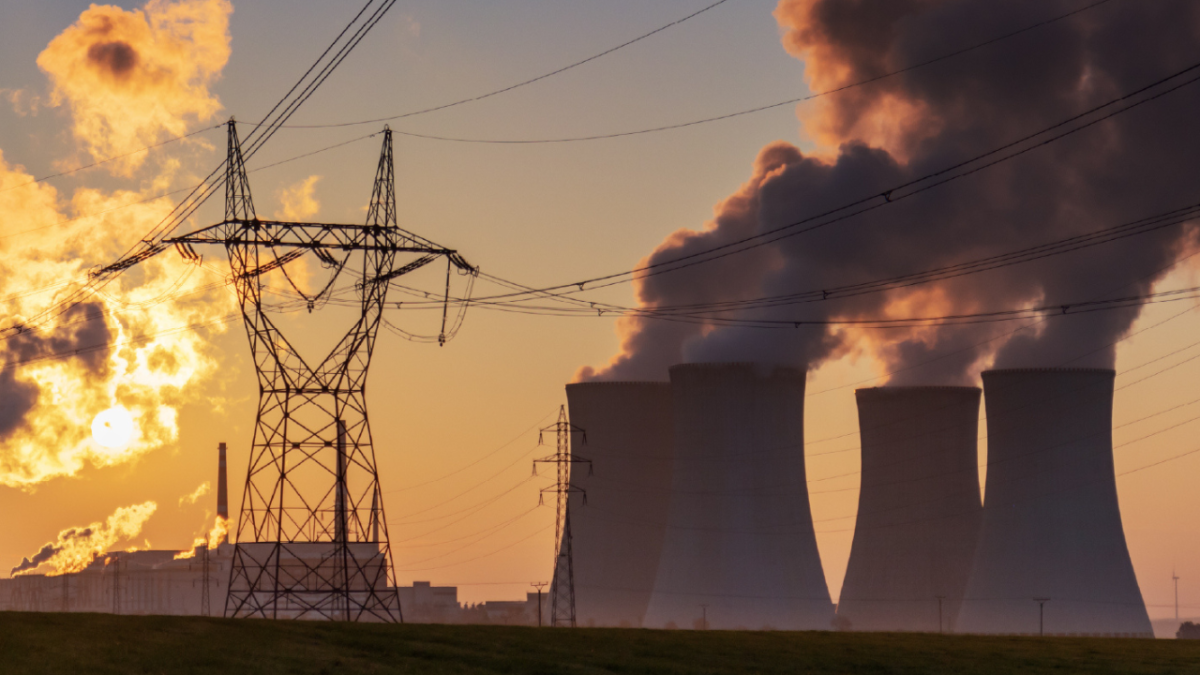
nuclear-power-plant

As the global nuclear landscape evolves, Australia is on the cusp of a potential transformative shift—not only in industrial and defence applications, but also as an option for our energy mix. Could a nuclear-powered future be on the horizon for Australia?  

Join us for an expert-led discussion exploring how nuclear innovations will impact Australia’s future. Our distinguished panel will examine the role of nuclear technology in shaping not only our key industries, but also the potential for how nuclear energy could contribute to Australia’s zero-emissions future. What innovations are on the horizon, and how can Australia position itself as a global leader in both energy and non-energy nuclear applications?  

Don't miss out on this opportunity to engage with experts and gain a deeper understanding of the future of nuclear technology in Australia. 
 

To discuss nuclear disruption in four dimensions: 

  • Global Experiences: How the USA and UK have adapted governance and policy to use nuclear energy and what lessons Australia can learn. 

  • New Supply Chain Resilience and Vulnerabilities: Developing a robust supply chain to support nuclear electricity generation. 

  • Advanced technology: Innovations in nuclear technology and their potential applications in Australia. Are SMRs real? And would you take one to the Moon? 

  • Technology integration: Or, what happens when you ask nuclear, renewables, batteries and an AI data centre to all work together?


Speakers
Sir-Robin-Grimes

Sir Robin Grimes

Professor of Materials Physics at Imperial College London, Former Chief Scientific Advisor for the UK government

Sir Robin Grimes has been a Professor of Materials Physics at Imperial College London for 20 years. He is internationally renowned for his work on atomic-scale simulation of nuclear fuels. He served as the Chief Scientific Adviser for the UK government for 8 years, first for the Foreign and Commonwealth Office and later for the Ministry of Defence (nuclear). He has chaired important groups on emergency response and international nuclear diplomacy, including the JCPOA team, leaving a lasting legacy of incorporating science as a crucial tool in the UK's diplomatic efforts.

He was appointed a Fellow of the Royal Society in 2018 and received his OBE in the New Year's Honours list in 2022. Recently, he was appointed as a non-executive director of the UK Atomic Energy Authority (UKAEA).

Cindy-Vestergaard

Dr. Cindy Vestergaard

Senior Fellow and Director of the Converging Technologies and Global Security Program at the Stimson Centre

Dr. Cindy Vestergaard is the Senior Fellow and Director of the Converging Technologies and Global Security Program at the Stimson Centre. She previously directed the Nuclear Safeguards Program and the Blockchain in Practice Program and served as Vice President, Special Projects and External Relations at DataTrails. Before joining Stimson, she was a senior researcher at the Danish Institute for International Studies and worked on non-proliferation, arms control, and disarmament policy at Canada's foreign ministry. Cindy frequently lectures and contributes to media on issues related to weapons of mass destruction, proliferation, and disarmament.

Iain-MacGill

Professor Iain MacGill

Professor in the School of Electrical Engineering and Telecommunications at UNSW

Iain MacGill is a Professor in the School of Electrical Engineering and Telecommunications at UNSW and Joint Director of the Collaboration on Energy and Environmental Market. He focuses on integrating renewable energy technologies into the electricity industry. He has also worked as a former consultant in smart control systems for the mining industry and served as a senior policy analyst in Washington DC. Additionally, he has published numerous research papers on energy policy and market design, contributing significantly to the field. His work aims to advance sustainable energy solutions and address the challenges of climate change.

Edward Obbard headshot

Associate Professor Edward Obbard

Director of the UNSW Nuclear Innovation Centre

Associate Professor Ed Obbard is the Director of the UNSW Nuclear Innovation Centre, leading nuclear engineering research, education, and social engagement UNSW-wide.Ed worked 2010-2015 as a Facility Scientist at ANSTO, where he designed and built a new post irradiation examination (PIE) hot cell facility for the OPAL research reactor. He lectures in reactor physics, thermal hydraulics, nuclear safety, security and safeguards at UNSW. He co-chairs the OECD-NEA working group on ‘Rethinking the relationship between nuclear energy and society’, and his work on blockchain technology for nuclear materials accounting won the 2021 Innovation in Global Security Prize at Geneva Centre for Security Policy.