Style and Ideology in Literary Translation: Wild Swans as a case Study

23 November 2021
3.00pm – 4.30pm AEDT
Online
This event has ended
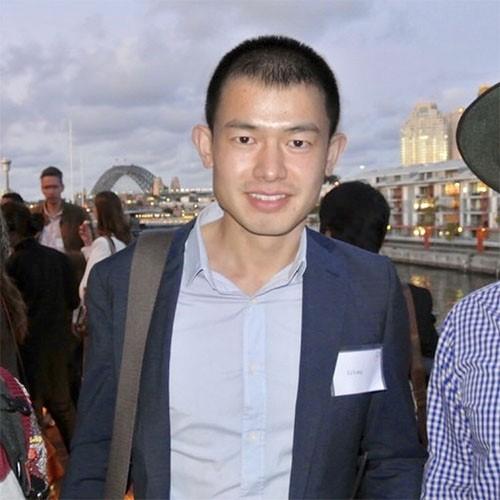
man smiling, with blue blazer, light blue shirt and sydney harbour behind him

Abstract

This talk examines how changes in style can realise ideological purposes in translation. Professional translators are expected to not only transfer the source style but also deliver the translation in a style appropriate to the genre-specific conventions of the target language (see rubrics of the NAATI certified translator test). However, one ought to move beyond subjective intuition to define ‘style’ and discuss its subsequent consequences. Borrowing notions from Stylistics such as ‘foregrounding’ (i.e., Halliday 1971) and ‘latent patterning’ (Butt 1988), this talk probes selections of lexicogrammar that may seem insignificant locally (viz. transitivity roles for agency; small shifts of modal intensities) but can engineer powerful ensemble effects to the extent of altering the ideological positioning. It presents a case study of an unusual translation phenomenon: Chinese migrant writers whose works were first published in English and subsequently translated into Chinese via other channels (i.e., by the author’s brother). The book in focus is Wild Swans (Chang 1991), which has sold 15 million copies internationally but is banned and virtually unknown in the author’ country of origin. A key site for controversy is its attribution of historical responsibilities in describing China’s Cultural Revolution (1966–1976). This talk will demonstrate how translation shifts in the image of key agents in the Cultural Revolution have led to an altered overall ‘narrative’ (Baker 2006). It also explores general implications on how a translator’s style or motivated choices can be usefully distinguished from those reflective of the target language norms.

About Presenter 

Dr Long Li is a lecturer in the Translation & Interpreting program at UNSW Sydney and convenes the NAATI Translation Certification Preparation course. He holds a B.A. (Macao Polytechnic Institute) and an M.A. (The University of Queensland) both in Chinese-English Translation and Interpreting, and a PhD in Linguistics (Macquarie University). Dr Li is a NAATI certified translator (Chinese<>English) and interpreter (Mandarin<>English) with expertise in the legal and healthcare discourses. He is also an AUSIT member, a former committee member of its NSW Branch, and currently the UNSW representative on the national Education Committee. His research interests include the influence of political ideology in the translations of politically controversial English works by Chinese migrant writers, Orientalism, contrastive linguistics between English and Chinese, corpus linguistics, multimodality, and more recently, the pedagogical efficacy of automated, AI-based English diagnostics tools.


References

Baker, Mona (2006) Translation and Conflict: A Narrative Account. London/New York: Routledge.

Butt David (1988) ‘Randomness, order and the latent patterning of text’. In: Birch D and O’Toole Michael (eds) Functions of Style. London and New York: Pinter Publishers, 74–97.

NAATI (2021) Certified Translator Test Assessment Rubrics. https://www.naati.com.au/wp-content/uploads/2020/10/Certified-Translator-Assessment-Rubrics.pdf.

Halliday Michael (1971) ‘Linguistic function and literary style: An inquiry into William Golding’s The Inheritors’. In: Chatman S (edS) Literary Style: A Symposium. Oxford: Oxford University Press, 330–368.

Li, Long (2020) ‘Shifts of agency in translation: a case study of the Chinese translation of Wild Swans’, META 65 (1): 168-192. DOI:https://doi.org/10.7202/1073641ar

Li, Long, and Li, Xi (2021) 'Who ‘let all this happen’? Shifts of responsibilities in representing the Cultural Revolution in Jung Chang’s Wild Swans', Language and Literature 30: 54-77, http://dx.doi.org/10.1177/0963947020960293