Workshop 1: Imagining crises otherwise: infrastructures, technology and materiality

22 July 2025
2.00pm – 4.00pm AEST
Morven Brown Building (C20) Lvl 2 Room 209
This event has ended

Join the School of Humanities and Languages for Imagining crises otherwise: infrastructures, technology and materiality, the first workshop of the Power in Crisis Research Conversations series

In recent years, former political leaders have characterised our world as being in a state of ‘permacrisis’, while historians have called our present situation a ‘polycrisis’ - a set of cascading emergencies that challenge the foundations of our societies. This series of conversations across the disciplines in the School of Humanities & Languages seeks to interrogate the idea of crisis and the politics that emerge from the apparently incontrovertible assertion that we are in a time of unprecedented peril, politically, ecologically, socially, economically and more.

Speakers
Angela Smith

Dr Angela Smith

Atmospheric entanglements: thinking politics through air

This talk examines air as an elemental medium through which crisis takes shape: materially, politically, and affectively. Air is not simply atmosphere or infrastructure; it is a volatile, pressurised, and unevenly governed volume that links bodies, borders, and environments. From polluted cities and airborne viral transmission to drone surveillance and the racialised politics of breath, air reveals entangled geographies of vulnerability and control. Drawing on critical geographic approaches, I consider how air and atmosphere shape the distribution of exposure, repression, resistance, and care under intensifying planetary duress. Thinking with air also compels us to trace the unstable boundaries between human and more-than-human life, between inside and outside, and between terrain and elements. This talk argues for attending to air as a site of political composition, where infrastructures, ecologies, and embodied relations converge under pressure and through struggle. 

Madelaine Moore

Dr Madelaine Moore

The global water crisis: a crisis of what? For whom? Where?

Collectively, we face a global water crisis, whether that is because there is too much, too little or the water available is too polluted. Over 40% of the world already living in water insecure areas, and this number is set to grow. As a result, the terrains in and around water governance are rapidly changing. Within international fora – such as the 2023 UN conference on Water, the first UN conference on water in over 50 years – the global water crisis is increasingly approached as a crisis of financing. For water insecure communities, it is a crisis of historical and future mismanagement, for ecosystems it is a crisis of survival. Water is predominantly managed at highly localised scales, needing to respond to place-based problems, yet the discourse of the global water crisis is increasingly global, raising questions of scale, place and abstraction. Water is a flow resource, and while concepts such as the hydrosocial cycle and waterscapes attend to its socio-political materiality and the ways in which it both reflects and exacerbates existing socio-political relations and inequalities, the question of what is in crisis (water, eco-systems, governance regimes…) and how crisis at different points in the hydro-social cycle might flow into or re-mould other points is not fully addressed. This talk will explore how the global water crisis has been constructed, asking what is in crisis? For whom? And why?
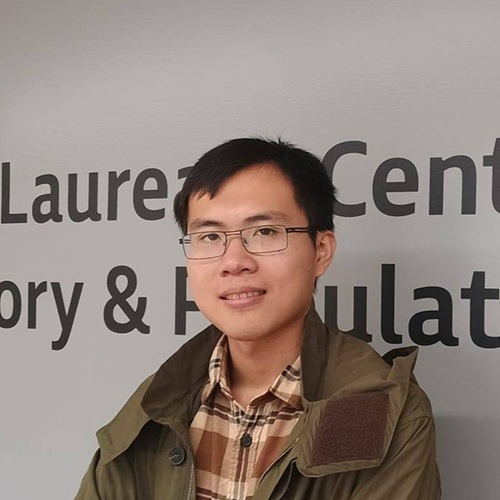
Mr Leo Chu

Mr Leo Chu

On Crises and Miracles: Technoscience, State, and Society in Cold War Taiwan

Recently, the importance of Taiwan’s semiconductor industry to the global economy and its delicate geopolitical situation has led to speculations about looming crises, yet crises are not new to the island. This talk analyses how the authoritarian government adapted to various crises through technoscientific policies from 1950 to 1990, and how the civil society responded to and transform the state. Drawing from the intersection of history of development and science studies, especially Thomas Kuhn’s approach to crisis, I explore how military, diplomatic, and economic crises reshaped Taiwan’s technoscientific policy and yet reinforced the developmentalist paradigm. It was the societal response to crises that created a parallel mechanism to reform the political structure. How to resolve the tensions between a developmentalist paradigm depending on global supply chain and a democratic paradigm seeking to make alliance based on shared values is crucial for not only Taiwan but the international community in the century.

David Blaazer

Prof David Blaazer

Money in the polycrisis: comparisons, reflections, speculations.

The most obvious point of comparison for the present crisis is the interwar period: floundering liberal democracies supplanted by authoritarian populism; a fading global hegemon; international instability and the looming possibility of war between great powers – all unfolding against a backdrop of ongoing economic malaise and its attendant despair and disillusion. In this paper I will focus specifically on comparisons between the monetary and financial crises of the two periods. These include the global instability created by the ebbing of monetary power from the former hegemon; the clashing monetary and financial ambitions of rival states, and the constraints on meaningful change imposed by powerful non-state actors. I will consider whether these crises can be considered causative of crises of either period, and ask whether semi-permanent crisis is endemic to the current architecture of the monetary system under capitalism.